How to Prevent Ice Dams on Your Home: A Homeowner’s Guide
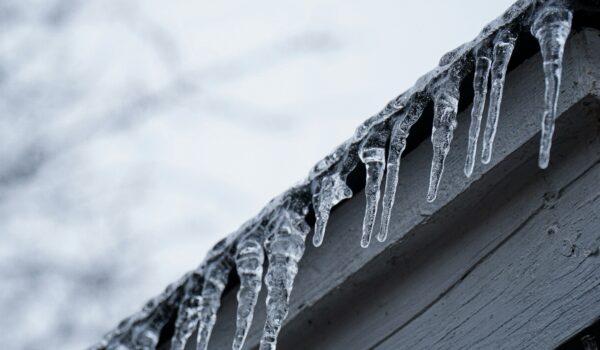
If you’ve noticed icicles hanging from your gutters or mysterious water stains on your ceiling after a snowstorm, you might be dealing with ice dams. While those icicles might look picturesque, they’re often a warning sign of a problem that deserves your attention.
What Are Ice Dams?
Ice dams form when heat escaping from your attic melts snow on your roof. The water runs down toward your gutters, but when it reaches the colder eaves, it refreezes. Over time, this creates a ridge of ice that blocks proper drainage. As more snow melts, the trapped water has nowhere to go but under your shingles and into your home.
The result? Water can damage your ceilings, walls, and insulation. The moisture can also create conditions for mold growth that affects your family’s health and your home’s value.
Warning Signs to Watch For
Ice dams don’t always announce themselves with dramatic indoor waterfalls. Watch for these early warning signs:
- Large icicles hanging from your gutters or roof edge
- Water stains or discoloration on interior ceilings and walls
- Peeling paint or warped wood near the roofline
- Ice buildup in your gutters
- Sagging gutters pulling away from the house
What Causes Ice Dams?
Three factors typically contribute to ice dam formation: inadequate attic insulation that allows heat to escape, poor attic ventilation that doesn’t keep the roof deck cold enough, and clogged or poorly functioning gutters that trap water and ice.
Your roof’s design matters too. Complex rooflines with multiple valleys tend to accumulate more snow, increasing your risk. Homes with older insulation or ventilation systems are particularly vulnerable.
Understanding the Impact
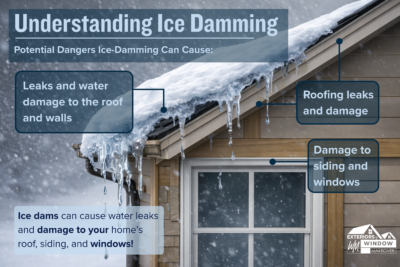
Ice dams can affect multiple parts of your home. Water that backs up under shingles can impact your roof decking and insulation. Interior damage to drywall and paint is common. When moisture lingers, it creates an environment where mold can develop.
The good news? Ice dam damage is largely preventable when you understand what to look for and take proactive steps.
What to Do If You Already Have Ice Dams
If you discover ice dams forming on your home, take these steps:
Safe approaches:
- Remove snow from your roof using a roof rake (work from the ground when possible)
- Create channels through the ice dam to allow trapped water to drain
- Use calcium chloride ice melt in a tube sock laid across the dam (never rock salt, which can damage shingles)
What to avoid:
- Never chip at ice with hammers, axes, or sharp tools—you’ll damage your roof
- Don’t use high-pressure steam or water, which can force water under shingles
- Avoid climbing on an icy roof yourself
When to call for help immediately:
- You see active leaking inside your home
- Ice dams are large or cover significant portions of your roof
- You’re unable to safely access problem areas
Take Action for Your Home
The best time to address ice dam risks is before they cause damage. A professional inspection can identify vulnerable areas in your roofing system, evaluate your attic insulation and ventilation, assess your gutter condition and drainage, and spot early signs of ice dam formation you might have missed.
Being proactive means you can address small issues before they become bigger problems. Our team specializes in comprehensive exterior home assessments that help you make informed decisions about your property. We’ll evaluate your entire system—roof, gutters, siding, and windows—to identify areas that need attention and recommend solutions tailored to your home.
Schedule your free inspection today. Your home is your biggest investment—make informed decisions to protect it throughout the winter season.